Hospital realignments provide significant benefits for patients and communities, according to a new comprehensive analysis of hospital realignment studies. This research finding recognizes the broader context for why hospital realignment is necessary, and challenges the narrow focus of outdated studies that have created misperceptions about the impact of realignments.
This comprehensive review and research by the Center for Healthcare Economics and Policy reviewed 75 studies spanning the years 1996-2013, as well as 36 primary sources for its study. The Center’s analysis outlines improvements in health care for communities that result from mergers, including:
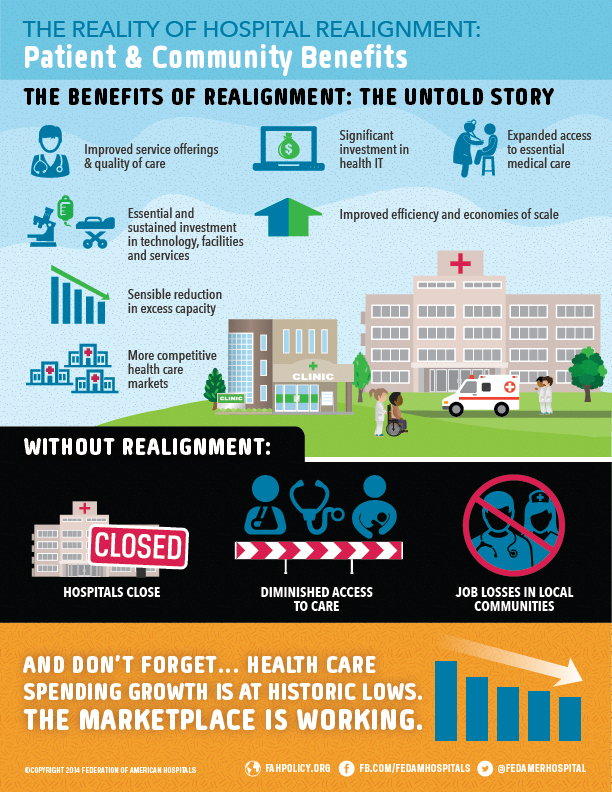
- * Preserved and expanded access to essential medical care
- * Improved service offerings and quality of care
- * Sustained and necessary investment in technology, facilities and health IT
- * Sensible reduction in excess capacity
- * More competitive health care markets
Equally important, the report underscores that without realignment patients and communities may face disruptions in emergency services, other service lapses and potential hospital closures.
The study yields a critical finding on cost of care: there is no consistent statistical relationship between realignment and hospital price increases. And the reason these common misperceptions—perpetuated in reporting and by others in the health care sector—are not reflective of the current market realities? The Center points to outdated studies using old data dating back to the early 1990s, which reflect much different market conditions than currently exist. These studies have contributed to a biased perception of realignment today.
The Center’s analysis of recent realignments shows the vast majority of mergers do not impede market competition. When you combine that with the inability to consistently link realignment and pricing, the study serves to debunk the two most common assertions criticizing hospital mergers.
“This analysis is a reality check that turns the prevailing policy mantra about consolidation on its head,” said Chip Kahn, President and Chief Executive Officer of the Federation of American Hospitals. “We now have a contemporary assessment demonstrating that hospital realignment preserves local communities’ access to essential care and provides additional benefits to patients and communities.”
“Perceptions about hospital consolidation and pricing also miss the big picture: keystone government and private studies show the U.S. is in the midst of a stunning and enduring health care spending slowdown,” Mr. Kahn added.
The benefits from hospital realignment are substantial, and rooted in the continuing efforts of hospitals to preserve access to care as well as improve quality of care for patients in communities across the country. The sustaining of critical patient access to care, the improvements in hospital services due to realignment and the potential impact on a community where needed realignment does not take place cannot be overlooked in current dialogue about hospital mergers.
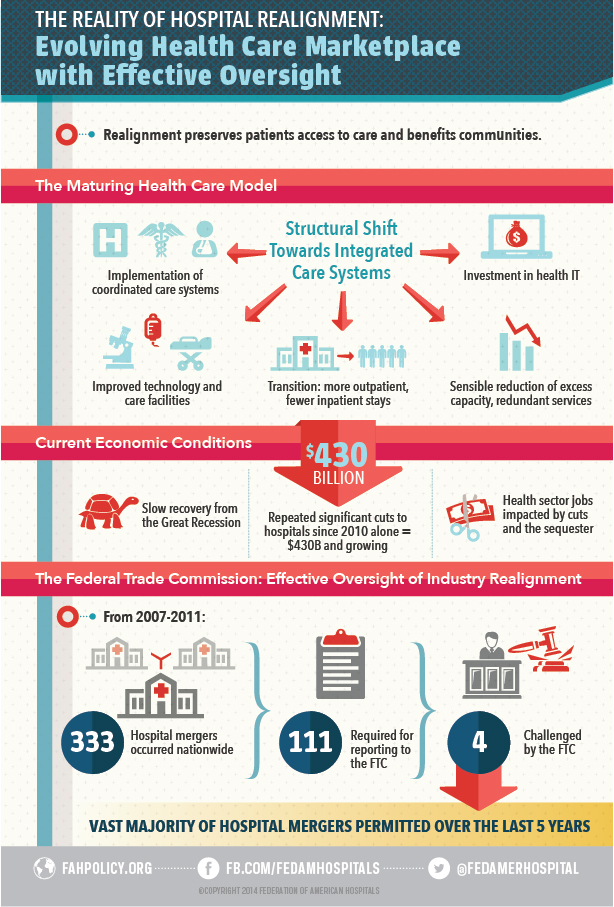
Another facet of the Center’s study assesses the drivers behind realignments today. Currently, the nation’s health care landscape is shifting toward integrated systems and coordinated care; according to the Center’s study this shift creates sustainable market conditions for hospital care and services. It is this transition of the health care model in conjunction with other factors, including substantial public sector reductions in hospital funding, which necessitates many of these realignments – hospitals must adapt to survive and continue serving their patients.
One thing is clear: by pursuing mergers and other realignment efforts, hospitals are able to maintain their presence in the community and preserve patient access to care. Some commonly-held views on these transactions do not hold up to contemporary analysis, as they are rooted in twenty-year old data and market conditions that no longer compare. Today’s health care market is evolving and experiencing many severe constraints. Changes are necessary to ensure patients’ access to essential and quality care is not jeopardized by massive public sector cuts and other factors in the current environment.